What to Wear Fly Fishing: The Complete Clothing Guide for UK Rivers
What to Wear
Fly Fishing
on UK Rivers
A practical, season-by-season clothing guide for river and loch fishing — from a brand that donates 5% of profits to wild Atlantic salmon conservation.
Stand on a riverbank in Scotland in March and you'll understand immediately why clothing matters on the water. The cold comes from three directions at once — the air, the water, and the wind moving off it — and it does so in a way that feels more persistent than anything you'll encounter on a hillside. Get it wrong and you won't be fishing effectively inside an hour. Get it right and you can stand in a river all day, focused entirely on the water.
This guide is for anyone who wants a clear, practical answer to what to wear fly fishing in the UK — whether you're a seasoned salmon angler refreshing your kit, or someone heading to the river for the first time and trying to figure out what you actually need. We'll cover every layer, explain why each one matters, and give you specific product recommendations from the Ghillie range. No technical jargon, no padding — just the information you need to be comfortable and fish well.
One note on perspective: Ghillie donates 5% of every sale to the Atlantic Salmon Trust, funding wild salmon and river habitat conservation. The rivers this guide talks about are rivers we genuinely care about protecting.
The Fishing Clothing System — At a Glance
Essential Layers
- Merino or synthetic base layer — moisture management
- Flannel shirt — warmth, breathability, utility
- Wool gilet — core insulation, arm freedom
- Waterproof wading jacket — outer weather protection
- Chest waders + wading boots — river entry
Accessories
- Beanie or warm hat — heat retention
- Cap or peaked hat — glare reduction, sun
- Fingerless or fishing gloves — cold hands
- Warm wool socks — under waders
- Polarised sunglasses — reading water
The Foundation
Why Layering Matters More on the River Than Anywhere Else
Fly fishing creates a unique clothing challenge. You're stationary for long periods — which means your body heat drops — but you're also casting repeatedly, which generates warmth. You're exposed to wind off the water. You may be wading in cold river water up to your waist. And the British weather will change three times before lunch.
The layering system solves all of this — but only if each layer is doing its specific job. A waterproof jacket without a proper mid layer underneath won't keep you warm. A heavy jumper without a moisture-wicking base will leave you damp and cold after your first hour of active casting. The system only works as a system.
There's also a consideration that's specific to fishing: noise and feel. Synthetic mid layers can rustle against wading jackets. Stiff or bulky clothing restricts the shoulder movement needed for a clean Spey cast or a long overhead cast. The best fishing clothing is the kind that disappears — you stop noticing you're wearing it and focus entirely on the water.
Build your kit in layers you can adjust independently. You should be able to add or remove the gilet in ten seconds without disturbing your fishing. The ability to regulate temperature on the move is worth more than any single heavy garment.
Season by Season
What to Wear, Month by Month
February – April
Cold water. Variable conditions. Often the most demanding season.
- Heavyweight merino base layer — top and bottoms
- Brae or Munro Flannel Shirt — heavy brushed cotton mid layer
- Torr Wool Gilet over the flannel
- Insulated wading jacket — outer shell
- Neoprene or heavy breathable chest waders
- Highlander Beanie — non-negotiable
- Fingerless gloves or fishing mitts
- Wool socks — doubled up if needed
May – June
Warming air but still cold water. The most enjoyable conditions.
- Lightweight merino or synthetic base layer
- Munro Flannel — Seastorm as primary mid layer
- Torr Gilet for mornings and evenings
- Lightweight breathable wading jacket
- Breathable chest or waist waders
- Tarvie Cap for sun and glare
- Polarised sunglasses — essential for reading the water
July – August
Low water often. Warm days. Cold early mornings on the river.
- Lightweight base layer or long sleeve tee
- Brae Flannel — Offshore worn open in warm conditions
- Gilet packed for evening sessions
- Light packable wading jacket for rain
- Breathable waders or wet wading in warm water
- Tarvie Cap or Torrish Trucker Cap for sun
September – November
Often the best fishing. Cold mornings, unpredictable afternoons.
- Merino base layer returning — top and leggings
- Brae Flannel — Raven for warmth and versatility
- Torr Wool Gilet back in daily rotation
- Corrie Down Jacket for cold early mornings
- Heavyweight breathable waders
- Highlander Beanie and fingerless gloves
- Trail Socks — pack spares
The Mid Layer
Why a Flannel Shirt Is the Best Thing You Can Wear on the River
Ask any experienced river angler what single piece of clothing they'd never go without and the answer, more often than not, is a good flannel shirt. Not a technical fishing shirt with UPF ratings and synthetic quick-dry fabric — a proper, heavyweight brushed cotton flannel that provides genuine warmth, moves with you during casting, and looks entirely at home when you walk off the river and into the nearest pub.
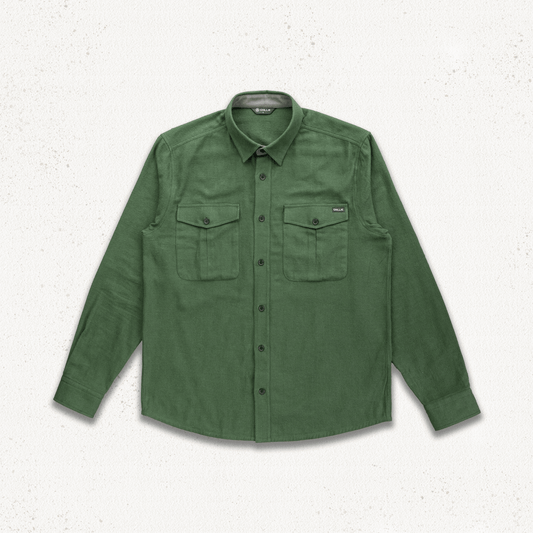
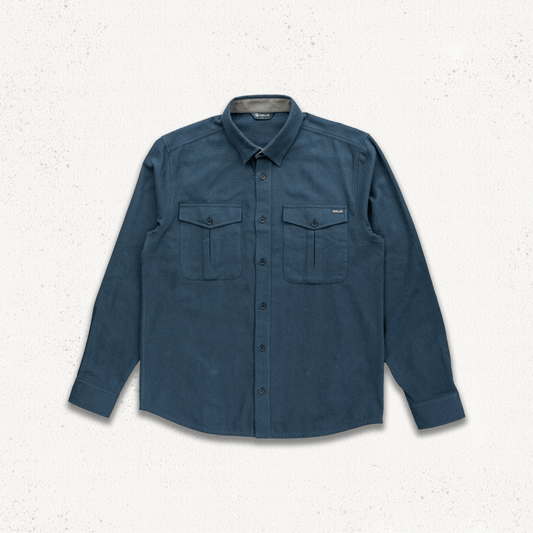
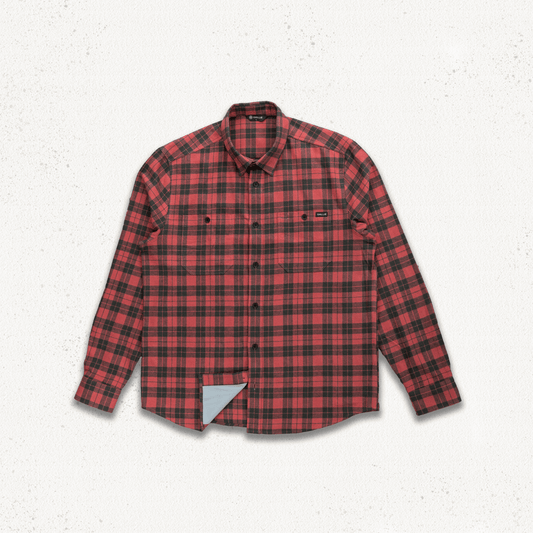
The Ghillie Brae and Munro Flannel Shirts were built with exactly this use in mind. 100% brushed cotton — soft enough to wear directly against a light base layer, warm enough to be the primary mid layer in all but the coldest conditions. A regular fit that doesn't restrict shoulder rotation or casting motion. A hidden button-down collar that stays in place under a wading jacket without flapping in the wind.
The Brae adds features that any angler will immediately appreciate: a built-in sunglass holder on the left chest pocket, secure internal pocket seams for keeping flies, forceps, or a licence dry, and a microfibre lens cloth sewn discreetly under the hem for cleaning polarised glasses in the field. The Munro is the cleaner, simpler option — deep pleated chest pockets, contrast drill-cotton detailing, and a profile that's equally at home on the water or off it.
- Material 100% brushed cotton — both sides — for genuine warmth and softness
- Fit Regular fit — full casting range of motion without excess fabric
- Collar Hidden button-down — stays flat under a wading jacket in any wind
- Noise Cotton is quiet — won't rustle against wading gear or spook fish on the bank
- Price £96 each — 20% off when buying two or more, any combination
Brae Colourways — Which to Choose


Munro Colourways


 Torr Wool Gilet — Peat
The Core Layer
The Wool Gilet: The Fishing Mid Layer That Nothing Else Replaces
A gilet is the fishing garment that most people come to late and then wonder how they ever managed without. The reason is simple: it solves the specific problem of river fishing better than any other single piece. You need core warmth — standing still for hours in cold air above cold water chills you at the torso first. But you also need your arms completely free for casting — a full-length jacket can restrict shoulder movement and impede a clean forward stroke on a long cast.
A well-made wool gilet gives you the core warmth without the restriction. It layers over a flannel shirt and under a wading jacket with no bulk. It can be worn as a standalone layer in milder conditions. And wool — unlike a synthetic down gilet or fleece — is a quiet fabric that won't rustle against your waders or jacket as you move along the bank.
The Torr Wool Gilet was two years in development. The Tech Wool fabric — 60% wool for natural warmth, blended for durability and shape retention — was created specifically to last longer than standard wool without losing the character and feel that makes wool worth wearing. Three YKK Vislon zip pockets, contrast brushed-cotton inner neck and zip guard, and custom logo zip pulls. In Peat — a deep earthy neutral that sits well beside every flannel colourway in the range.
- Fabric Tech Wool — 60% Wool, 32% Polyester, 3% Acrylic, 3% Polyamide, 2% Viscose
- Lining 100% cotton — soft, breathable inner
- Pockets Discreet chest pocket + 2 deep waist pockets, all YKK Vislon zips
- Noise Wool is naturally quiet — ideal for stalking the bank
- Care Air between wears. Dry clean only. Wool is antibacterial — less cleaning needed than you'd think
- Price £185 — built to last for years, not seasons
Wear the Torr Gilet zipped fully during cold static sessions; unzip it during active casting periods to vent. The YKK Vislon zip runs smoothly even with cold or wet hands — a small detail that matters considerably when you're standing in a river in February.
"The river doesn't care how good a caster you are if you're too cold to concentrate. Get the clothing right and everything else follows."
Common Questions
Fly Fishing Clothing — FAQ
What should I wear fly fishing in the UK?
For UK fly fishing, dress in three layers: a moisture-wicking base layer (merino is ideal), a mid layer such as a brushed cotton flannel shirt or wool gilet, and a waterproof wading jacket over the top. Add chest waders and wading boots for river fishing. In colder months, wear both the flannel and the gilet together under your wading jacket. Accessories — warm socks, a beanie or cap, polarised sunglasses — matter more than most people realise. The full list of seasonal recommendations is above.
What is the best mid layer for fly fishing?
A brushed cotton flannel shirt and a wool gilet used together make the best mid layer combination for UK fly fishing. The flannel provides warmth and breathability while keeping your arms free; the gilet adds focused core insulation for static, cold-water sessions. Either works alone in milder conditions. The combination covers you from early spring through late autumn without needing to change your approach significantly.
Why is wool particularly good for fishing clothing?
Wool has several properties that make it specifically well-suited to fishing. It regulates temperature naturally — keeping you warm when you're static and not overheating you when you're casting. It's moisture-resistant and continues to insulate even when damp. Critically for fishing, wool is a quiet fabric — it doesn't rustle against wading jackets or vegetation the way synthetic materials can, which matters when you're moving along a bank or through vegetation. The Torr Wool Gilet uses a wool blend specifically developed for durability — so you get all of these properties in a garment built to last for years of regular use.
What should I wear salmon fishing in Scotland?
Scottish salmon fishing — particularly spring fishing on rivers like the Spey, Tay, Dee, or Tweed — demands serious layering. Start with a heavyweight merino base layer (top and leggings), add a heavy brushed cotton flannel shirt as your primary mid layer, then layer the Torr Wool Gilet over the flannel for additional core warmth. Over all of this goes a waterproof, insulated wading jacket. Add neoprene or heavyweight breathable waders, a warm beanie, and fingerless gloves or fishing mitts. In autumn, conditions are often more forgiving — the flannel alone may be sufficient as a mid layer on warmer days.
Can I wear a flannel shirt under a wading jacket?
Yes — and it's one of the best combinations for UK river fishing. The Ghillie Brae and Munro Flannel Shirts are cut in a regular fit that sits cleanly under a wading jacket without bunching. The hidden button-down collar stays flat under the jacket's collar regardless of wind or movement. Many anglers wear a flannel over a base layer and then add the Torr Gilet between the flannel and the wading jacket on colder days — this three-layer mid combination is genuinely effective in early season conditions.
What colour clothing should I wear fly fishing?
Earth tones and muted colours are generally best for river fishing — they blend naturally with riverside vegetation and don't catch the light in a way that might alert wary fish. The Ghillie flannel range — Marine, Offshore, Raven, Rifle on the Brae; Rifle Green and Seastorm on the Munro — all sit naturally in riverside settings. The Peat tone of the Torr Gilet is similarly well-suited to natural environments.
We Care About the Rivers Too
Ghillie® donates 5% of every sale to the Atlantic Salmon Trust — funding conservation work that protects wild Atlantic salmon and the river habitats they depend on. The rivers this guide talks about are rivers we're actively working to protect. Every purchase contributes to that work.
Build Your River Kit
Shop the Fishing Essentials


Ready for the River
Shop the Ghillie Range
Free UK delivery on orders over £90. 20% off two or more flannel shirts. 5% of every sale funds wild salmon conservation.